
Community
PopUp Bagels opening first-ever Minnesota location in Minneapolis
By Katherine Langford
Advertisement · Why this ad?
Marcus manages the day-to-day editorial workflow across all brands, coordinating coverage assignments and ensuring editorial standards are met. He previously served as city editor at the Pioneer Press and holds a degree in Political Science from Carleton College.
More from Marcus →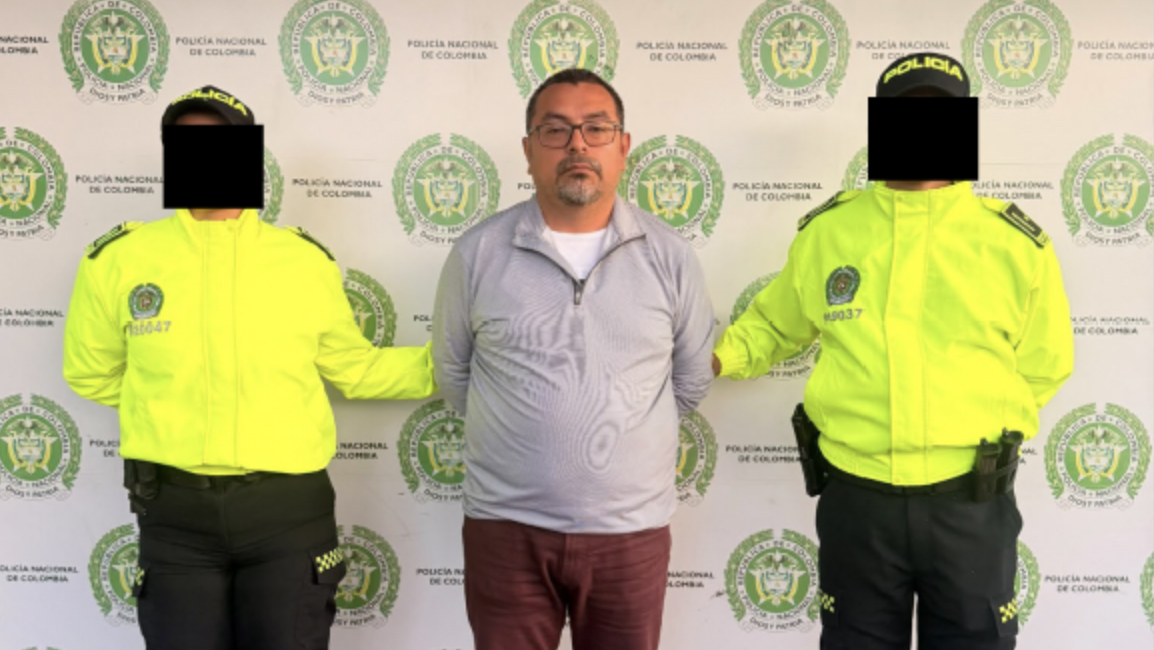
In a shocking turn that underscores the reach of international drug cartels and the corruption that can infiltrate justice systems, a Mexican judge was arrested in Colombia last weekend for allegedly accepting a $2 million bribe. The arrest of Luis Benítez Alcántara reveals a tangled web of crime involving high-stakes drug trafficking, a former Olympic snowboarder turned fugitive, and a Canadian drug trafficker linked to a major transnational operation.
Luis Benítez Alcántara, a 49-year-old judge based in Mexico City, was detained in Colombia after accusations surfaced that he accepted a $2 million bribe to free Andrew Clark, a Canadian drug trafficker and second-in-command to the notorious Ryan Wedding. The Department of Justice (DOJ) states Alcántara issued rulings that allowed Clark to avoid detention, facilitating his escape from Mexican custody in October 2024.
Clark, arrested in Mexico and facing serious charges including drug trafficking, murder, and attempted murder, was transferred to U.S. authorities after his release. The DOJ alleges that between November 2024 and February 2025, Clark paid Alcántara a total of $2.75 million—$2 million of which was the bribe—to secure his release. The judge’s arrest in Colombia signals the international scope of this investigation, which aims to extradite Alcántara to face federal charges in the United States.
According to court documents, Alcántara used his judicial authority to grant Clark bond and order his release, actions that directly contravened U.S. and Mexican law. The DOJ's release indicates Alcántara received the $2 million payment on February 24, 2025, after which Clark was freed and subsequently re-arrested in the U.S. A few days later, Clark was extradited to face federal charges, continuing a saga that highlights the vulnerabilities within judicial systems vulnerable to corruption.
Meanwhile, Ryan Wedding, a former Olympic snowboarder turned drug lord, remains in U.S. custody after being captured in Mexico in January 2026. Facing multiple charges—including drug trafficking, murder, and attempted murder—Wedding is scheduled for two trials in 2027, underscoring the severity and scale of his operation.
The arrest of Alcántara has sent shockwaves through the legal and law enforcement communities in Mexico and beyond. Local officials and residents emphasize the importance of integrity in the judiciary, especially given the high-profile nature of the case involving a former Olympian and a drug empire that stretched into the United States.
Many community leaders are calling for increased oversight of judicial conduct and stronger anti-corruption measures to prevent similar cases. “A fair justice system is the backbone of our society,” said Maria Torres, a community organizer in Mexico City. “When corruption infiltrates the courts, it erodes public trust and endangers families who depend on justice being served.”
For families affected by the drug trade, these developments are a stark reminder of the ongoing struggle to keep communities safe and uphold the rule of law. The case also highlights the importance of strong marriages and committed families—values that can serve as a bulwark against the chaos of crime and corruption. Communities built on honesty and faith stand the best chance of resisting the darker influences of organized crime.
In Mexico City, where this scandal is unfolding, local neighborhoods have long been battlegrounds for drug violence and corruption. The city’s sprawling urban landscape, with its dense population of over 9 million residents, has seen an increase in community-led initiatives aimed at reducing violence and promoting transparency. Local NGOs, religious groups, and youth organizations are working tirelessly to rebuild trust and foster resilience among vulnerable populations.
As the investigation unfolds, residents are encouraged to support local initiatives aimed at youth education and crime prevention. Faith-based organizations and community groups play a vital role in fostering resilience and hope amid these troubling revelations.
The case involving Alcántara is not an isolated incident but part of a broader pattern of corruption and organized crime that has plagued Mexico for decades. Historically, Mexico’s justice system has faced challenges with impunity, with many officials suspected or convicted of colluding with cartels. This has fueled public distrust and complicated efforts to combat drug trafficking and violence.
Local communities, especially in regions like Sinaloa, Guerrero, and the Mexico City metropolitan area, have borne the brunt of this ongoing crisis. The city itself, often seen as a hub for drug trafficking routes, has become a focal point for law enforcement crackdowns and community resistance movements.
High-profile cases like this one often reignite debates about judicial independence, the need for reform, and the importance of protecting honest officials from corruption. The community’s response is crucial in shaping future policies and ensuring accountability at all levels of government.
Luis Benítez Alcántara’s arrest has brought attention to the personal stories behind the headlines. Alcántara, a seasoned judge with decades of experience, reportedly grew up in a modest neighborhood in Mexico City. His career, once marked by integrity, appears to have been compromised by the lure of corruption, possibly driven by the dangerous environment created by drug cartels operating within the country.
Andrew Clark, the Canadian trafficker, has a background that illustrates the international dimension of drug trafficking. Originally from Toronto, Clark’s involvement in the drug trade escalated over the years, eventually leading him into the inner circles of Ryan Wedding’s operation. Clark’s case exemplifies how organized crime crosses borders, impacting communities in North America and Latin America alike.
Ryan Wedding’s story is equally compelling. Once an Olympic athlete, he transitioned into the criminal world, building a drug empire that spanned multiple countries. His arrest in January 2026 marked a significant victory for law enforcement but also underscored the persistent challenge of dismantling well-entrenched criminal networks.
The DOJ is actively pursuing Alcántara’s extradition from Colombia, with formal requests underway. Once in U.S. custody, the judge faces up to 15 years in prison on each of nine counts of being an accessory after the fact. Meanwhile, Clark’s ongoing trial and Wedding’s upcoming court dates in 2027 will keep law enforcement busy as they seek justice for their victims.
This case also serves as a stark reminder of the importance of integrity within the judicial system. Strengthening oversight and accountability measures can help prevent corruption and protect families who rely on fair justice. The community’s hope is that these arrests will serve as a deterrent to others tempted by the promise of money over morality.
Looking ahead, local leaders and law enforcement agencies are calling for continued vigilance and cooperation across borders. The fight against organized crime is complex, but with steadfast commitment, communities can rebuild trust and restore the moral fabric that keeps families strong and resilient.
In the coming months, expect increased efforts in cross-border cooperation, judicial reforms, and community outreach programs aimed at preventing similar cases. The residents of Mexico City and surrounding communities remain hopeful that justice will prevail and that the fight against corruption and organized crime will continue to make their neighborhoods safer.
By Katherine Langford

By Katherine Langford

By Marcus Chen

By Marcus Chen